



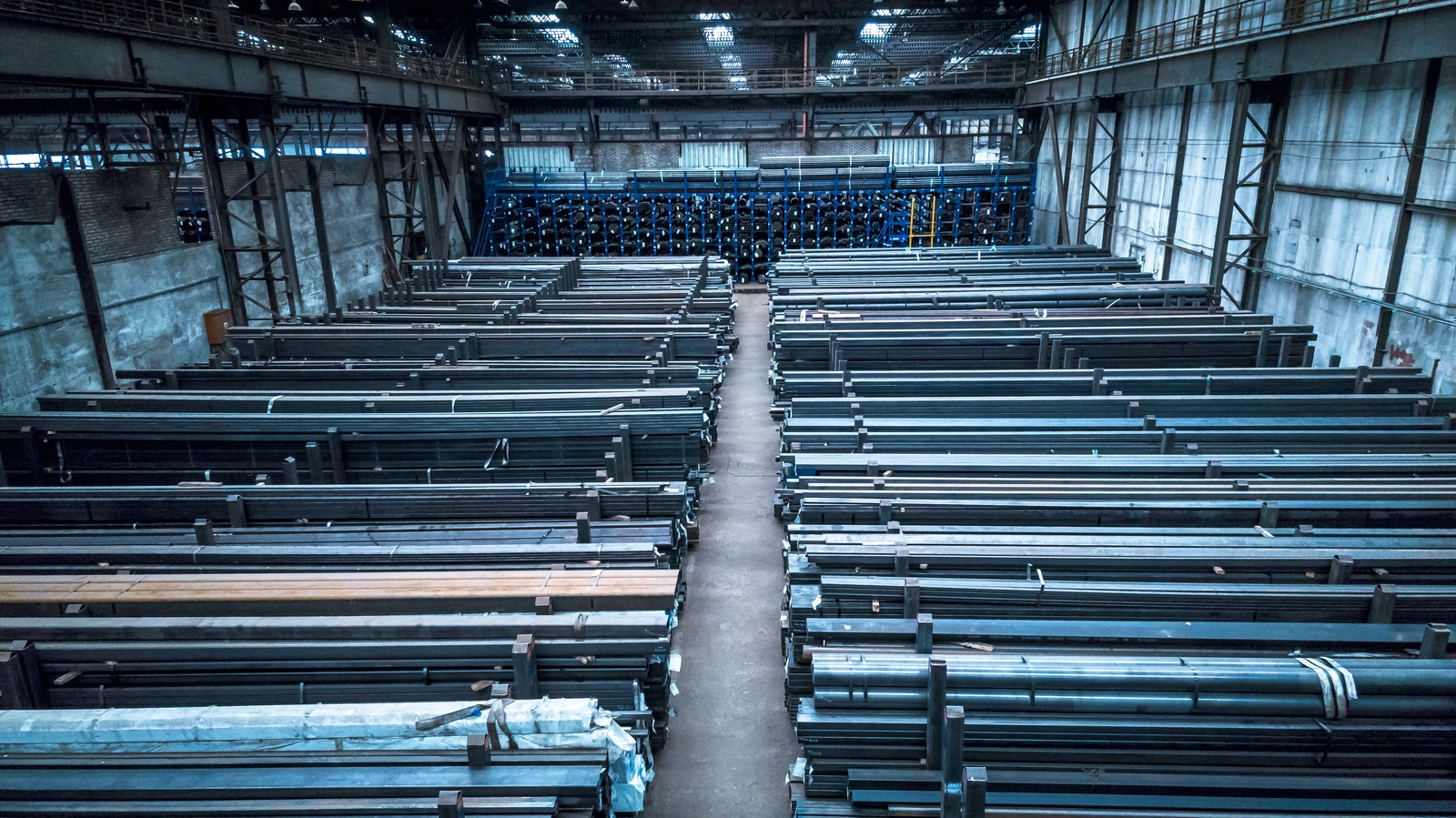
Cold-formed profiles are manufactured by bending strips of steel sheet on roller bending machines and joining the ends together, usually through welding, to create a closed structure with a rectangular cross-section. This process, carried out with high strength and precision, results in profiles with ergonomic weight distribution and thinner wall thickness compared to hot-rolled sections.
Advantages of Cold-Formed Profiles
High Strength and Precision: The production method enhances material strength, providing fibrousness to the structure and preventing healing and recrystallization marks.
Lightweight and Cost-Effective: These profiles are lighter and more affordable than hot-rolled sections, making them versatile structural components.
Applications of Cold-Formed Profiles
Construction: Light hall structures, roof purlins, fencing systems, gates, greenhouse structures, scaffolding.
Automotive: Components for trailers, semi-trailers, and trucks.
Railway: Chassis and body components for railway and tram carriages, carriage accessories, railway accessories.
Energy: Energy traction poles.
Telecommunications: Radio and mobile phone masts, transmitters, antennas, cable ducts.
Engineering: Agricultural and construction machinery.
Logistics and Storage: High storage systems, equipment for large shops and petrol stations.
Infrastructure and Transport: Road barriers, noise barriers.
Customization Options
Special lengths available on request.
Flat-oval sections, tunnels, and lenses available on request.
Inner spline removal possible.
| Profiles with a seam | Precision profiles with a seam / with removed flash | |
| Standard | EN 10219 | EN 10305-5 |
| Grade | S235JRH, S275J0H, S355J0H, S355J2H, S420MH, S500MH, S600MH, S700MH | E235, E220, E355, E470 (CR1 S1, CR1 S2, CR2 S1, CR2 S2) |
| Certificate | certificate 3.1 or 3.2 according to EN 10204 | certificate 3.1 or 3.2 according to EN 10204 |
| Diameter range |
|
|
| Wall thickness | 1,5 mm - 16 mm | 0,5 mm - 3,0 mm |
| Length of sections | L=6m, L=12m; -0/+50mm | L=6m |