



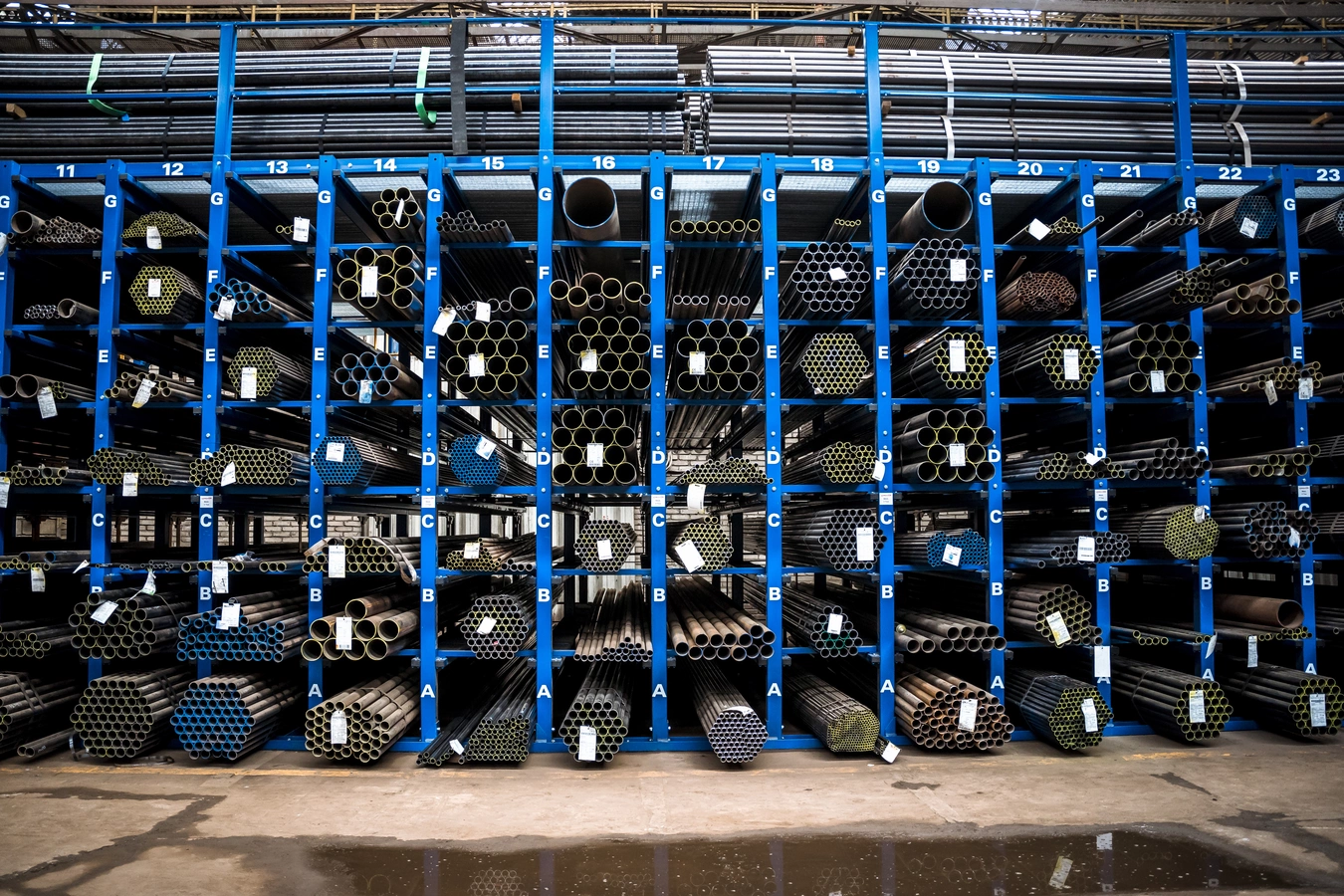
Seam welded pipes are formed by bending steel plates or strips at temperatures below the recrystallization temperature of 400 to 700°C. These pipes can have either a longitudinal or spiral seam. This method allows for the creation of pipes with thinner walls and smaller cross-sections compared to other techniques.
Production Process of Seam Pipes
Cold-Rolling Process:
Begins with forming a "slotted pipe," a rolled-up sheet or strip with edges that come together but are not permanently connected.
Edges are joined using HF welding, SAW welding, or TIG welding.
Welding Techniques:
Ends Welding: Edges of the sheet are butt welded (in contact) or overlapped.
Helical Welding: Strip or sheet is rolled diagonally relative to the axis of the strip.
Final Steps:
After welding, pipes are heated and finished.
| Seamless Precision Pipes | Cold-formed Seamless Pipes | |
| Standard | EN 10305-3 | EN 10219 |
| Steel Grades | E235 / E220 / E355 / E470 | S235JRH, S275J0H, S355J0H, S355J2H, S420MH, S500MH, S600MH, S700MH |
| Certificate | certificate 3.1 or 3.2 according to EN 10204 standard | certificate 3.1 or 3.2 according to EN 10204 standard |
| Range of Diameters | 9,5 – 76,1 mm | 21,3 – 508 mm |
| Wall Thickness | from 0.8 mm to 3 mm | from 1,5 mm to 20 mm |
Cold-formed seam pipes are available in lengths of 6 m or 12 m, with custom lengths and internal debonding removal available on request.
Diameters above 508 mm are available on request.